Creative Corner

tHE CREATIVE CORNER

Presentation made by Aahitagni Moitra, Aishani Chaudhury, Radhikaramn Gharai, Sangbartika Ray (AS Level)
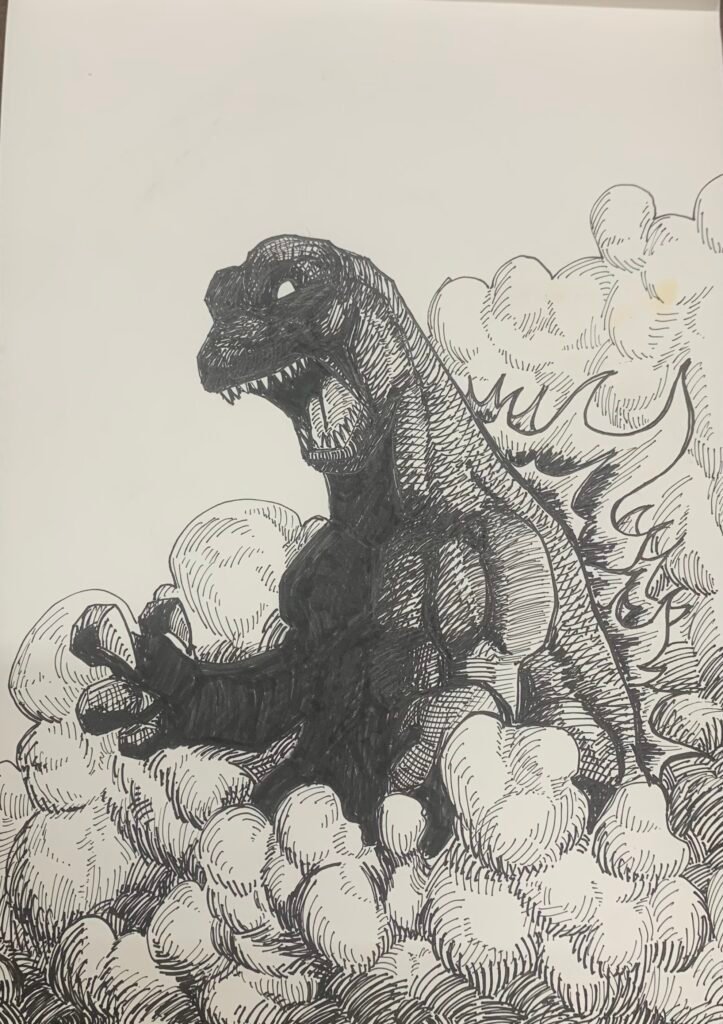
Artwork by Ayren Chiu of A2
Poem by Enakshi Bhattacharya of AS level
The Calm to My Chaos
 
Written by – Reeshi Raj Sengupta 
 
The maths and spelling tests are done,
 
The pre-Puja rush is crazy fun.
 
The holidays have now begun,
 
As shoppers gather, one by one.
 
Bamboo and cloth block every road,
 
The festive spirit lightens every load.
 
The heavy exam stress fades away,
 
As we welcome the festive days.
 
For pandals, building day and night,
 
Traffic creates jams left and right.
 
 
Yet finally, Durga Puja time is here,
 
Bringing joy, excitement and cheer.
 
We happily pass the street-side trams,
 
While dhak drums echo through the jams.
 
Amidst the chaos, colours and lights,
 
Durga Puja makes everything feel right.


Leftover Clay

By Srinandita Mukhopadhyay (Grade 9)

Sometimes I wonder
if heaven made him first,
carefully shaping the curve of his smile,
the quiet in his eyes,
the warmth that makes a room
feel softer when he walks in.

And when God was finished,
perhaps there was a little clay left
resting beneath His fingertips.

Maybe He looked at it
and thought of me.

Because why else would my eyes
know exactly where to find him
in a crowded room?

Why would one glimpse of him
make my heart remember
a feeling it never learned to name?

Perhaps my eyes were fashioned
from whatever was left of him,
a trace of the same dust,
a whisper of the same light.

So when I look at him
and my soul aches for just a second,
maybe it isn’t longing at all.

Maybe it’s recognition.

Maybe some small part of me
has always known
that we were made
from the same hands.

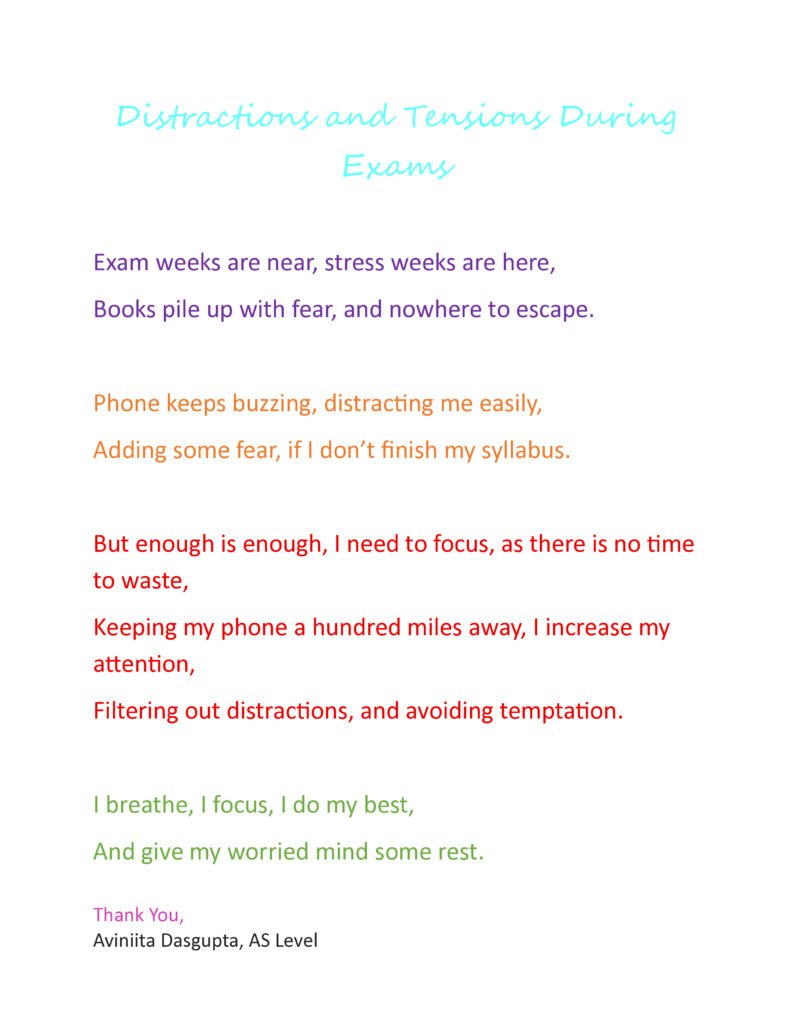
Poem by Aviniita Dasgupta (AS level)

My First Adventure in Nepal by Swapnanil Roy of class 5

Hi, I am Anik Ray and I’ll tell you about my first adventure in Nepal. First, I have taken a flight from India to Nepal. We have our own team; our team has 20 people and we will climb at the peak of Mt. Everest. The length of Mt. Everest is about 8,848.86 meters, and it was very challenging, and nobody had climbed there. I have my best friend here; his name is Ravi Ghosh, and he is a scientist.

As we landed in Tribhuvan International Airport situated in Kathmandu, the capital of Nepal, after coming out from the flight, we decided to stay in a hotel. Then the next day we explored some famous temples in Nepal. Before that, we enjoyed in our hotel. There is a casino near our hotel, so we went there and enjoyed.

Now it is 4 o’clock, Ravi and I woke up, and later 2 hours we have seen a great thing: the Golden Kanchenjunga mountain. Ravi told me—as he is a scientist, he told the Kanchenjunga becomes golden between October and December because the sun’s light direction changes and falls directly on the Kanchenjunga, and it becomes golden. And afterwards, all the team members have been woken up and reading important things. And under 8:00 a.m. the bus came and took us direct in front of Mt. Everest, not very close but close. We had our tents for today.

Then next day we will move upward. As we are climbing up, the climate is becoming colder and colder. It is becoming difficult for us to survive and food is becoming lesser. Some of our teammates are starving, and some are having fever, and some of our teammates are having nosebleed. And slowly, slowly, because of starvation, out of 15 people only 5 people are left.


Now we had a plan that we will go back, but when we were packing our tools, a dangerous moment had come—the most dangerous animal, Yeti, came. We had screamed loudly and planned fastly that we will run together, but none of them can run fast, but I can run fast. We started running down and the Yeti started following us. And then a terrible thing happened to my best friend Ravi: he had stuck his leg in a hole, and the Yeti came and killed Ravi. I was crying and running, and suddenly the Yeti had jumped further and got them and killed them also. When the beast was busy eating them, I ran fast and got saved.

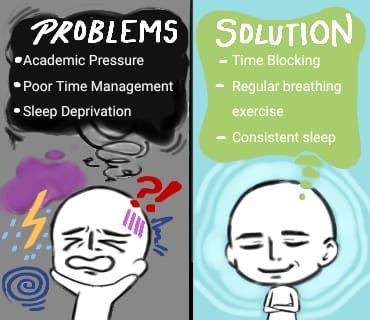
Digital Poster made by Myra Tamang of AS level
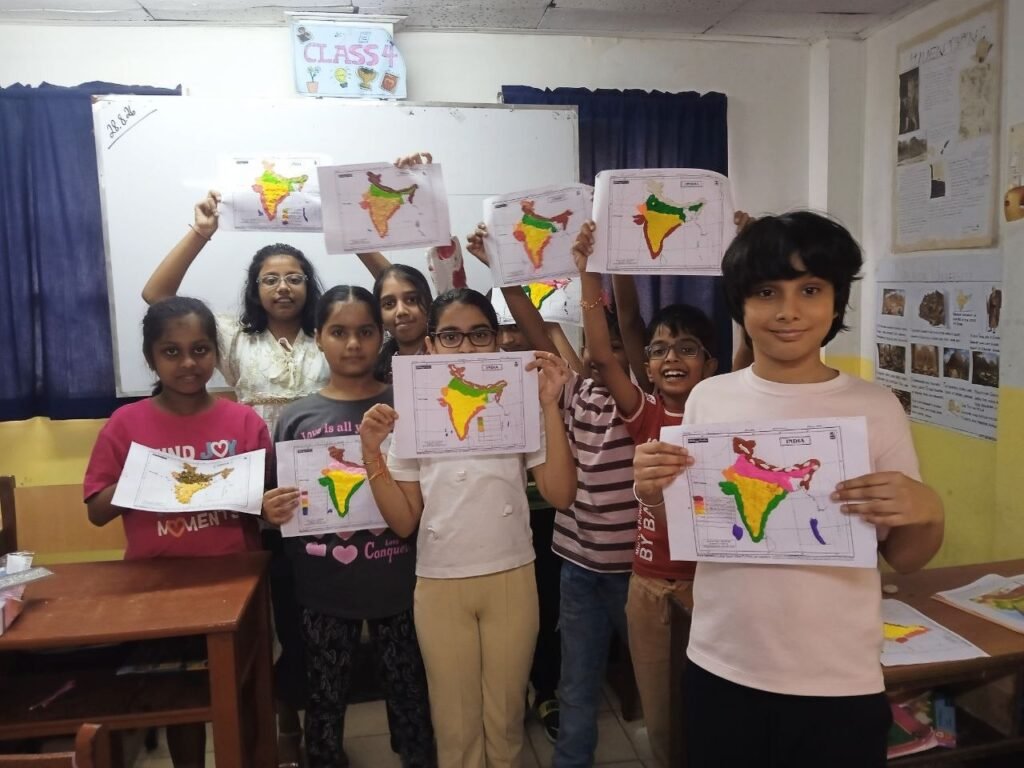
"Creative Minds Shaping India's Map : Class 4 Activity using Clay & Grains"

THE SCIENCE OF MEMORY

Your Brain’s Superpower!

By Arohi Biswas  |  Class V

✦ ✦ ✦ ✦ ✦ ✦ ✦ ✦ ✦ ✦ ✦ ✦ ✦ ✦ ✦ ✦ ✦ ✦ ✦ ✦ ✦ ✦ 

Have you ever remembered a song, your way to school, a birthday, or how to ride a bicycle? That is your memory at work!


Memory isn’t about remembering answers for a test. While learning about the brain, I have discovered that memory is much more exciting. It is one of the amazing ways our brain helps us learn from the world around us, keep experiences safe, and bring them back when we need them.

Figure 1. The three-step journey of memory: encoding, storage and retrieval, with short-term and long-term memory.

How Does Memory Work?

  1. Encoding — Our brain first takes in information and turns it into something that can be remembered. Paying attention helps this first step.
  2. Storage — The information is kept in the brain. Some memories stay briefly, while important memories can remain for a very long time.
  3. Retrieval — When we need a memory, our brain brings it back. This is what happens when we remember an answer, a name, a story or how to do something.

A Sticky Note and a Treasure Chest

Short-term memory is like a sticky note. It holds information for a short time—for example, remembering a page number or a small list while we are using it. Long-term memory is more like a treasure chest. It can keep memories for days, months or even a lifetime, such as a familiar lullaby, our first day at school, or how to tie our shoelaces.

Figure 2. Three types of memory shown in the poster: sensory, short-term and long-term memory.

Three Types of Memory

The poster explains memory as three connected stages. Sensory memory is the very quick first moment when our senses notice something. Short-term memory keeps information for a short while so we can use it. Long-term memory stores information for much longer.

Type

How it helps

Everyday example

Sensory memory

Captures information from our senses very briefly.

Seeing a bright flash or hearing a bell.

Short-term memory

Holds information briefly while we use it.

Remembering a phone number just long enough to say it.

Long-term memory

Keeps important information and experiences for a long time.

Remembering a birthday or how to ride a bicycle.


Meet the Hippocampus!

One of the most fascinating things I learned is about the hippocampus. It is a small part of the brain shaped a little like a seahorse. The poster introduces it as an important helper for organising and storing memories. I like to imagine it as a tiny librarian helping our brain keep memories in the right place!

Figure 3. Simple, everyday habits suggested in the poster to support learning and memory.

How Can We Make Our Memory Stronger?

The good news is that memory practice can be simple—and fun! The poster suggests six friendly habits:

  1. Get enough sleep — A well-rested brain can remember better. A calming bedtime routine can help.
  2. Eat healthy foods — Fruits, vegetables, nuts and whole grains, along with enough water, support healthy habits.
  3. Stay active & exercise — Walking, cycling, dancing or playing gets the body moving and can help us focus.
  4. Draw mind maps — Connecting ideas with drawings and colours can make tricky information easier to remember.
  5. Play fun memory games — Puzzles, flashcards and matching games turn practice into play.
  6. Try brain boosters — Reading, riddles, learning a song or drawing something new keep the brain curious and challenged.

My favourite idea: making learning interesting with rhymes, funny stories, colours and drawings. When learning feels like an adventure, it becomes easier to enjoy—and easier to remember!

Figure 4. Twelve fun facts about memory, including neurons, sleep, drawing, emotions, teaching others and stories.

12 Amazing Memory Facts

1. Your brain has billions of neurons. These tiny nerve cells form a huge network that helps the brain work.

2. The hippocampus is shaped a little like a seahorse. It is an important memory-related part of the brain.

3. Smells can trigger memories. A familiar smell can sometimes remind us of a person, place or experience.

4. Forgetting can be useful. We do not need to keep every tiny detail forever.

5. Muscle memory is real. With practice, actions such as riding a bicycle can become easier and more automatic.

6. The number 7 is often used in memory examples. The poster highlights the ‘magic number 7’ as a fun memory fact.

7. Sleep is a memory booster. Rest gives our brain time to process what we have learned.

8. Drawing can help us remember. Turning information into a picture gives the brain another way to connect with it.

9. Teaching others can improve recall. Explaining something makes us think carefully about what we know.

10. Déjà vu feels like a brain glitch. It is the strange feeling that something happening now has happened before.

11. Emotions can make memories stronger. Strong feelings can make experiences especially memorable.

12. Stories help us remember. Information inside a story can be easier and more enjoyable to recall.


My Memory Challenge!

Tonight, learn one new fact. Draw a small picture about it. Then, without looking at your notes, try to recall the fact tomorrow. You may be surprised by what your brain can remember!

REMEMBER:  Practice + Curiosity + Fun = Stronger Memory!

“Your brain is amazing — keep learning, keep exploring, and keep curious!”

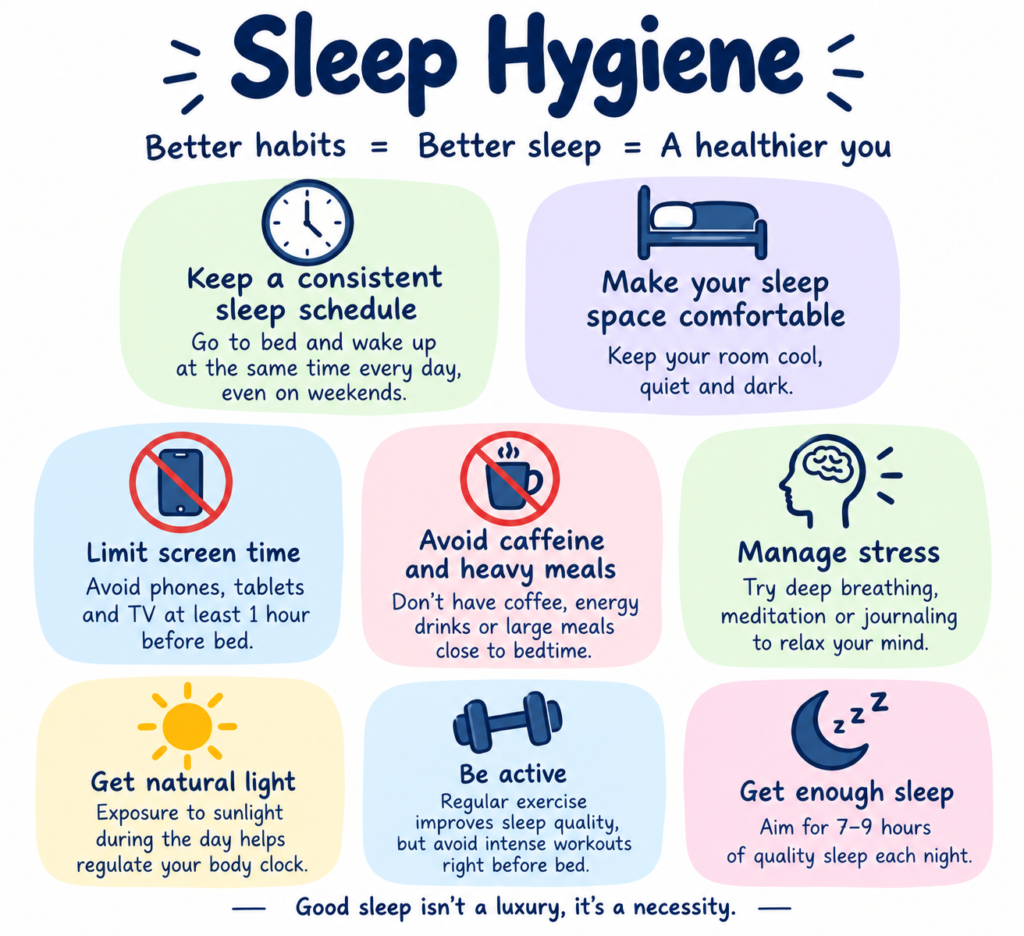
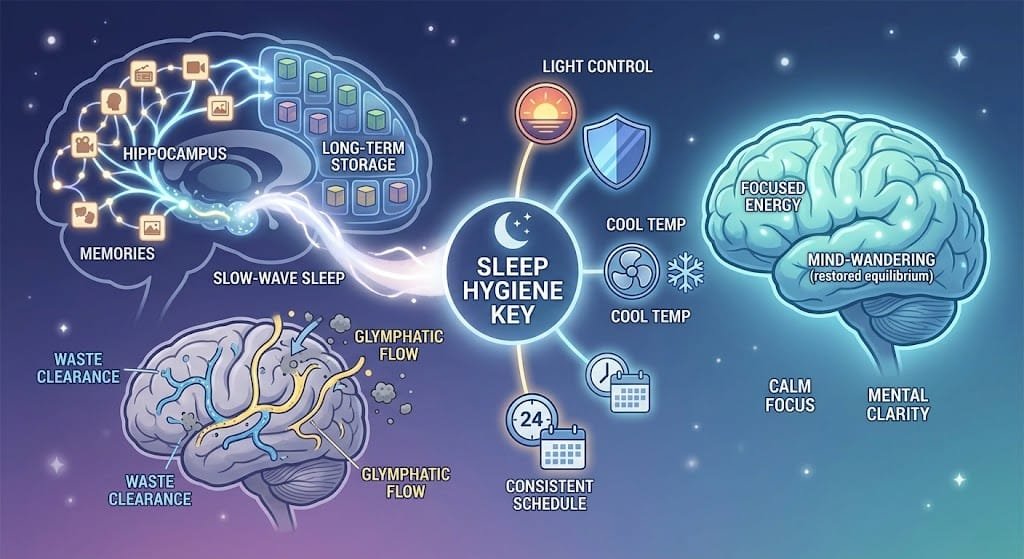
Sleep is a dynamic process where the human brain actively performs multiple functions. This is not a state of being inactive but highly organized biological cycle. It requires us to stop conscious thinking and let the brain do its job properly. In the state of deep sleep, or slow-wave sleep, the brain completes several vital operations impossible when one is awake. This includes creating and emitting slow brain waves, which transfer information from short-term memory to long-term memory. This process happens mostly in the interaction between the hippocampus, which temporarily stores new information, and the neocortex, where it is permanently kept. Lack of deep sleep, therefore, prevents the brain from consolidating the facts, figures, and formulas to be then hard to recollect under examination conditions. This is why students who stay up all night cramming often remember less than those who study and then sleep. Furthermore, students who study hard during the day fill up their brain with a vast amount of information irrelevant. The brain has a limited capacity, and without a cleaning mechanism, it would become overloaded. Sleep helps to clear it and remove insignificant details to prepare the brain for learning anew on the following day. Neuroscience describes this as synaptic pruning, where weak neural connections are weakened to make strong ones more evident. Additionally, at night, when we sleep heavily, cerebrospinal fluid circulates through the brain through the glymphatic system, a network discovered in 2013. This fluid acts like a washing system, eliminating metabolic wastes and toxic proteins, such as beta-amyloid, produced during the day. Without enough sleep, this waste accumulates, remains in the brain, and causes mental fatigue, lack of concentration, and substantial stress. Over years, poor sleep is linked to a higher risk of neurodegenerative diseases. The collection of special rules, referred to as sleep hygiene, helps maintain good sleeping patterns and is especially important for students during exams. Exposure to bright natural sunlight during the day and dim, warm light during the night is necessary for the human body to function correctly, because light is the main signal for our internal clock. When a person falls asleep in darkness, the brain interprets the absence of light as nightfall and begins producing melatonin, a hormone that promotes deep, dreamless sleep, while reducing cortisol, the stress hormone. Artificial light sources, especially blue light from phones and laptops prevent the onset of melatonin production, confuse the brain, and delay sleep. Thus, it is recommended to turn them off at least 60 minutes before bedtime and avoid checking notifications in bed. The human body temperature also decreases slightly by about 1 degree when it is time to sleep, and the environment should be cooler than during the day, ideally around 18-19 degrees Celsius, to help the body reach deep, restful sleep faster. Finally, going to bed and waking up at the same time every day, even on weekends, regulates the circadian rhythm and ensures that the brain receives enough deep sleep to function at its best. This regularity trains the brain to know when to release hormones and when to begin its memory and cleaning work.
The transition from chaotic days spent on exams to a calm state of mind can be achieved only through sufficient and high-quality rest. Following the rules of sleep hygiene helps examinees keep track of their deep brain activity and protect it. The brain remains active during the night, eliminating the information that it finds useless and washing away the toxins of the day. On the other hand, it strengthens and transfers the data needed for the subsequent day. Therefore, students who maintain a proper sleeping regime benefit considerably from the deep-sleep process. They not only feel more rested and less anxious but can also successfully carry over the information learned in the morning of the following day into the long-term memory, which is the ultimate goal of learning. By, Viv Lilaram & Charles Liu Class 7

Nepal Flood

Binny Pareek

Class-v

Nature’s Fury: The Catastrophic Nepal Floods:

In late August 2026, a catastrophic flash flood tore through northern Nepal, leaving behind an unprecedented trail of destruction. Striking the Himalayan valley along the Nepal-China border, this sudden deluge has deeply impacted local communities and reshaped the region’s geography.

The Cause: A Climate-Induced Avalanche

Scientific assessments revealed that the disaster was triggered by a massive glacial collapse high on Langtang Lirung. An enormous chunk of ice and mountain bedrock snapped off, plunging over a vertical kilometre into the valley bottom. This devastating ice-rock avalanche pulverised into a high-energy torrent, mixing with monsoon sediments and causing a sudden, massive surge down the Bhotekoshi and Trishuli rivers.

The Aftermath: Devastation and Loss

The impact on Nepal has been devastating, straining the nation’s resources:

Humanitarian Crisis: The death toll has tragically surpassed 1,200 people, with over 4,000 individuals still reported missing.

Trapped Workers: Thick mud buried major hydropower plants, trapping hundreds of laborers inside underground tunnels where specialized international teams are racing against time to rescue them.

Erased Infrastructure: More than 25 miles of roads and dozens of bridges—including 40 critical suspension crossings—were completely washed away. This has entirely marooned a quarter of a million citizens .

Economic Blow: The flood battered surface-built dams and communication lines. It knocked out nearly 12% of Nepal’s national electricity grid capacity, resulting in losses worth billions of rupees.


This tragedy serves as a stark, urgent reminder of how rising global temperatures accelerate glacier instability, placing vulnerable mountain ecosystems at extreme risk.

The Underlying Driver: Climate Change

Geophysicists and environmental scientists note that climate change is the primary driver behind this sudden disaster. Rapidly warming temperatures in the Himalayan region cause high-altitude permafrost to degrade and glaciers to retreat. This drastically destabilises the mountain slopes, causing glaciers to accelerate and detach without the traditional waning sign of heavy rainfall.


A small amount of panic and a lot of focus or maybe vice versa

Anayshaa Ghosh
Class VII
 
There is a very specific kind of panic that knocks on your door a few days before an exam.Gaping at the same syllabus a few days before the exam for some reason suddenly seems twice as long. Every hour feels wasted and your brain thinks and tricks you into studying, but nothing sticks.Your brain starts manipulating you into believing that perhaps clearing your desk can somehow help you with your studies. Sounds strange, isn’t it? 
 
At first, all that wanders in our minds is that we think about how much we still have to do. Counting the chapters, calculating the hours left and then we promise that we will finish at a specific deadline to a few hours just passing by. The more we think about it, the less we actually get done.Then, at some point, you just start
 
Reading one page. Then another. Highlighting important portions as you go along, you start making tiny notes in the margins, start answering questions to test yourself. Slowly and gradually, the huge pile of work in your head gradually startes reducing to a few pages.
 
The funny thing is that the syllabus hasn’t changed. Its still the same chapters, the same questions and the same exam waiting at the end of it. What changes is the fact that we actually start studying.
 
Maybe that is why the hardest part of studying is sometimes simply beginning. We wait to feel motivated, calm and completely prepared before we start, when in reality realizing those feelings gradually often come after we sit down to study
 
The panic may still be there. nervousness about the exam will be present. But now instead of doing nothing and procrastinating we are doing something about it.And somewhere between having too much left and “let me finish this first” studying stops feeling quite so impossible. So instead of over planning and seeing a huge pile of syllabus left if we actually start studying then it feels way easier and makes us confident.


 A Chronicle of the Desk

By Daiwik Das (Grade 9)

It opened with a double blow of ink:

The Chemistry equations blurred our sight, As theory sheets and choice grids made us blink, The ICT text came before the night.

Then Maths arrived with keys and blinking screens, A short-lived truce before the true nightmare— For English loomed, a monster in the scenes, The two dangers of eighty marks stripped us bare.  The ink was blood upon those cruel sheets, The unseen texts a labyrinth of dread, As frantic heartbeats echoed in our seats, A deep silence and panic settled into every heavy head.

No sooner had that phantom left the hall, Than Physics struck with crushing, dual force, A double paper stacked against the wall, The vectors diverged from their originally planned course. 

Then numbers stripped of calculators came, And French verbs marched in rigid, tense design, Forty-five marks of reading, writing strain, Until we had crossed the final, finished line.

The heavy anvil drops; the whispers cease, The air, which had been suffocating, starts to become clearer. The quiet hallways bloom with sudden peace, We assert that this chaotic year has a calm.

Surviving our first IGCSE half-yearly exams

by Daiwik Das (Grade 9)

The time when the Grade 9 half-yearly exams arrived was by no means a quiet one; instead, it crept up on us like a shadow that took over our weekends and filled the school corridors with a deep, shared breath. Several weeks beforehand, our usual casual laughter disappeared and was replaced by the constant, ticking countdown shown by the classroom clocks. Textbooks went from being just ordinary paper books to sacred scripts, their pages fluttering wildly in the dim light of the late-night study sessions. The atmosphere became charged with anxiety—each student felt as if the entire burden of the Cambridge syllabus were being placed entirely on their own shoulders. 

As the exam dates advanced like an invading force, our timetable revealed its real, monstrous nature: the dreaded day when two papers had to be taken in one day. In the subjects of English, French and the sciences—Physics, Chemistry and Biology—we were required to take two separate papers on the same day. This was a continuous, non-stop race that drove us to the very edge of our endurance. We relied on energy drinks as our liquid courage, drinking them as a sweet remedy to combat the heavy, sluggish monsters of exhaustion. Highlighters spilled fluorescent pink and neon green ink over complicated chemical equations and French vocabulary lists, forming a bright, vivid picture of desperation. It was a wild, chaotic mixture of scratching pens, deep sighs, and the soft, steady rustling of flashcards. 

Then came the daily climax: the examination hall itself. The room was a frozen cave, a sharp contrast to the intense anxiety we felt inside. We sat there like statues in a silent purgatory, waiting for the invigilator to give the signal to open the papers. When at last we turned them over, a storm of ink burst forth. In the morning we had to deal with difficult Physics formulae, and by the afternoon our tired minds were forced to switch over and struggle with biological structures or French comprehension. For hours we kept our minds working and our fingers cramped, writing out our stores of knowledge into clean white answer books. 

But just as every storm eventually runs out of rain, the storm passed. The final bell did not just ring; it sang. It was a golden chime of freedom that broke our academic chains. As we stepped out into the warm afternoon light, a wave of relief swept through the entire student body. The heavy weight of stress disappeared, leaving us light, buoyant and victorious. We walked into the bright horizon of freedom, having faced our very first IGCSE crucible and come out wiser, stronger, and beautifully unburdened.


WHEN EXAM FEVER ENDS

By: Sudhir De (Grade 4)

From chaos to calm,

There’s no more alarm,

The exams are over 

And I’m a happy rover!

It’s time for fun, 

To joke and run.

No more chapters to husk

From dawn till dusk.